Saturday, March 19, 2011

We Are Speaking! By Hannah Davis


Have you heard the exciting news? We are going to present at the Sex::Tech Conference held in San Francisco on April 1st and 2nd. What is Sex::Tech you may ask? The event is a two day annual conference hosted by ISIS, Inc and brings together people who are technology experts, educators, researchers, social entrepreneurs, community leaders and youth and parent advocates. Each day people will be presenting on fascinating topics such as understanding the youth perspective, building your own ipod/ipad/iphone application, sexuality, gender and feminism in the age of technology and being a sex-positive educator.


Our group of volunteers, including Vanessa Lopez, Jesus Guzman, Marcos Garcilazo, and myself, Hannah Davis, along with our group facilitator Shana Friedman, will be speaking in an outbreak session the first day. During our presentation we will be discussing our program here at SCPOC, the value of peer-led social media, how holistic health approaches looks at mental health and its impact on sexual health, and the strategies we have tried using to reach the most people during our campaign. All of us are extremely excited to get the word out about our hard work and desire to teach teens about mental health and wellness.


This event is highly encouraged for teens and young adults to attend. If you are interested in going you should check out the Sex::Tech's website at sextech.org. If you are already attending this fabulous event we at SCPOC hope you will come listen to us and enjoy the experience.

Monday, March 7, 2011

How An Addiction Can Take Over Your Life By Hannah Davis


There are many types of addiction out there just waiting to tempt us. It could be food for one person, cigarettes for another, video games for someone else, or even pornography. No matter what type of addiction you have, it is a problem. When many people hear “addiction,” they think “drug addiction”, which is what we will talk about today.

Addiction is defined by dictionary.com as “the state of being enslaved to a habit or practice or to something that is psychologically or physically habit-forming to such an extent that its cessation causes severe trauma”. This means not only is what you are doing harming you mentally, physically, or both, you can’t stop.

At the point of addiction you have lost the ability to control your desires. Your body will go through withdrawal if you don’t get your fix. Have you ever tried to have a day with no coffee even though you normally have two or three cups? You may have gotten a headache or some other symptoms of withdrawal because your body is trying to adjust to the change. These symptoms differ with whatever drug you are addicted to and can be very painful.

In addition to being hooked, people who are addicted will need more and more of the substance they are addicted to as they build a tolerance. Once you have a tolerance it becomes necessary to take more in order to get the same effects.

Psychologically, a person on drugs may start to lie and steal in order to obtain their drugs. Their personality most likely will change as the drug takes over their life. Their drug use may be their misguided attempt to suppress their feelings or deal with problems that are occurring in their lives. No matter how bad things seem to be you should never resort to using drugs! Once you start it is all too easy to get addicted.

Trying to get over an addiction is a very hard thing to do. Quitting is most likely the hardest thing people will ever have to do. For instance, imagine your favorite food. What if you could never eat it again? It’s hard to let go of something that makes you feel good, right? Now imagine trying to stop taking something that is addicting, which you seem to need in order to survive.

There are many ways to quit drugs. Cold turkey is when you simply stop using the drug. While it sounds like a reasonable way, it isn’t always the best. The sudden stop can be very hard if you are dealing with a serious addiction. It may be easier and you may be more successful if the drug is slowly taken away. This can include cutting back on the number of drinks you are allowed to have in a night. If every week you take one away, you may be able to slowly adjust your body to the change.

Another great way is to talk to someone. Getting help and advice from your doctor is a good start. Most likely they will have dealt with others who have struggled just like you. They may have tips on how to quit and be able to explain what you may encounter on your journey to quitting, such as withdrawal symptoms and cravings you may experience. You can also talk to a psychologist who will help you discover why you started abusing drugs in the first place. This may help keep you from ever doing drugs again.

Try changing who you hang out with. If your friends are still smoking pot and you were addicted to smoking pot, don’t hang out with them! The temptation will be too much and may lead you to using again. Find new people and places to go that don’t involve those situations. By removing the temptation and starting over you will remove the chances of falling back into your addiction.

So what if you have finally overcome your addiction? Is it all over now? Sadly the answer is no. You will always have some temptation or thoughts that could lead you away from staying clean. If you do relapse you must try again to get your addiction back under control. Joining a support group may help keep you clean and be a friendly and open place to discuss your experiences and feelings as well as hear others.

If you want to see more tips for recovery check out Teens Health at http://kidshealth.org/teen/your_mind/problems/addictions.html# to see how you can get better or help a friend through this rough time.

Tuesday, February 22, 2011

Prison and How it Affects Us All By Intern Hannah Davis

While carpooling to work, one of my coworkers mentioned a concern she has with how there is little mental health care in prisons when so many prisoners are mentally ill. My curiosity was peaked so naturally I went to the internet to see what the current situation was for prisoners. Examinor.com claims that overcrowding is due to relapse, which accounts for approximately seventy percent of California inmates, many of which may have undiagnosed mental health disorders.


Since overcrowding is a problem, why hasn’t anyone taken the time to try and help these people get control of their mental issues? Doesn’t it make sense to spend extra time and money while they are there, in the system, instead of letting them go only to return weeks, months, or years later? Wouldn’t this, in the long run, save the taxpayers money?


Therapy and proper medication may be all it takes to help them get on the path to recovery. And yet I wonder if the small amount of time with a psychologist would be enough to really help them get better. There are so many prisoners currently in the system that people must consider how many professionals would need to be hired full time and how many hours each prisoner would get with them. Would inmates get weekly sessions, or would that be too much strain on the therapists? If the answer is yes that would be too much, then would it still be effective if these prisoners only meet once a month, or for half hour sessions every other week?


You’re probably wondering how does this topic apply to me? I’m not in jail. I’m not mentally ill.


Perhaps you are not. But what if one of your family members who has a mental illness commits a crime and while in jail doesn’t get proper attention. They may never get better and therefore continue his/her destructive pattern of violent or dangerous behavior that leads to another jail sentence. If a person is forced to participate in therapy if mentally ill, then they can start to get treated, whereas the same person in society may not seek help and quite possibly never get any better.


As I stated in an earlier blog, almost 25% of the population has a mental disorder. What if one day you develop one? Wouldn’t you feel more comfortable knowing that if your illness causes you to wind up in jail that you will be provided help? Or maybe you already have one that you think you can control, but over time your habits become harder to resist. You might feel that need to start a fire, or steal something from a store, or the voice in your head tells you to hurt someone.


Another reason is because we pay to keep our jails running. For anyone interested in fixing this part of the legal system they have quit a challenge ahead of them. People will need to convince their community that paying a little more to help those who are mentally ill within prisons is better then letting the current system continue. As taxpayers we should ask ourselves if we would rather pay a little more now and hopefully see a decrease in inmates and prices, or continue to pay a little less but never see a change. With the second option we may end up paying more in our lifetime then if we take the first option.


Plus, as a community isn’t it our responsibility and desire to help those who are in need? Shouldn’t we take care of those who may be unable to help themselves? One way I look at this is what would I want others to do if I was a mentally ill inmate who continuously goes to prison because of my disease. By putting ourselves in their place we can better comprehend the horror and need for change.


So, what can we do as a society to fix this current problem? The first step is to talk about it and start asking questions. These dialogues may lead to action, either by local government officials or someone in the community who becomes impassioned by the work. This action can eventually lead to debates about changing the legal system and providing therapy and treatment for mentally ill prisoners. If it comes to the ballots we then can vote and hopefully make our voices heard through change.


Sure, this may take a while to achieve, but isn’t it worth it if we can help even one person who is suffering from a mental disorder get better? Wouldn’t you want people fighting for your health and safety?

Monday, February 7, 2011

Love Can Hurt By Hannah Davis


Why do we always end up hurting those who mean the most to us? I’m sure I don’t stand alone when I think back on the heartache I have endured and caused those I love. It seems backwards to think that we hurt those who are most important to us the when we want nothing but happiness for them. Recently I read a blog by Aaron Ben-Zeévith and agreed with his ideas of why people tend to accidentally hurt those they care for. With some careful thought and consideration I have modified several of his possible reasons for this behavior and even come up with my own, all of which I wish to share with you in the hopes that, armed with this knowledge, we can reduce, if not eliminate, the pain we sometimes cause to those we love with all our heart.

Close personal relationships require people to break down their walls and reveal themselves including the good, the bad, and the ugly. This makes us extremely vulnerable and when we are in such an open state, we are more sensitive to what is said and done around us. Normally we are unintentionally hurt by those who love us. For instance, they might spend a lot of time working in order to create stability and a steady income in our lives, but we just notice their absence and how we feel neglected in their pursuit for money or success. These innocent but harmful issues need to be addressed so both people can resolve the issue and repair any damage done to the relationship.

A second reason is that we get a large amount of our happiness from those we love. This means that when we are disappointed or frustrated with them we tend to hurt because they, at that time, they no longer are a source of happiness. If this is the case, then it is impossible to have a completely blissful love where no pain is involved. With this in mind, we must remember that we can expect to be hurt once or twice in a relationship. If, someone is continuously hurting us or is doing so intentionally, then we can no longer assume they love us and the relationship may need to come to an end. Just because we are in love with someone doesn’t mean they will repay the feelings.

Perhaps a third component that leads to hurting those who matter most is that we look to them and believe they will never hurt us. Because of this it stings more when we are hurt by a statement or action that appears to be malevolent. Most people can think about their past and find a remark that really hurt them. I ask you to think about what upset and hurt you. Next imagine if another person had said that and how you would have reacted. Personally, I have come to the conclusion that when I am criticized by those I love, it seems to cut deeper then if told by a stranger or someone I don’t tend to care for. Does this make us more sensitive to the way those we love make us feel? Again, I believe this is because we have allowed ourselves to become vulnerable, and in this state we can be more easily hurt.

How does this apply to teens and young adults? During this challenging part of our lives we are exploring relationships and starting to date. Not everyone we fall for will be able to protect us from all pain; they cannot even protect us completely from themselves. For example, when I split from my first serious boyfriend it really hurt. The night we broke up he told me things that normally wouldn’t have hurt me, but coming from him it did. My feelings for him affected how I reacted to his words. I had never felt so torn down and broken, and in my humble opinion, this was because I was hurt by someone who I had allowed past the walls I had labored to create throughout my life. During our relationship we came across times when we accidentally hurt each other. When we got back together we had to focus on learning how to overcome our issues and understand what caused our pain.

I am not the only one to deal with these issues; everyone must undergo this stage of life. The pain and occasional heartache from love is experienced by teens and adults as we move through life in search of a mate that makes us truly happy. We may give our hearts away to people and in return get hurt. We may give love and not have it returned. Or we may be lucky and find that one we are meant to be with and come to learn that no matter how much we care for one another we will accidentally hurt our loved one and in return be hurt by them.

As Robert Burns, a Scottish poet from the sixteenth century, said, “Had we never lov'd sae kindly, Had we never lov'd sae blindly, Never met -- or never parted -- we had never been broken-hearted.

Monday, January 31, 2011

When Relationships Get Unexpected Surprises: Guest Post by Peer Leader Intern Hannah Davis


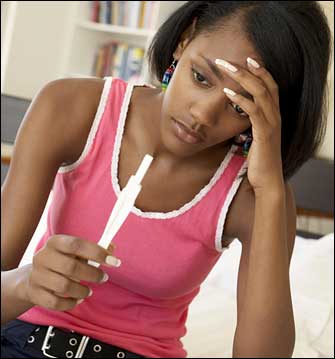
Relationships are complicated enough, but what happens when another person is thrown into the mix? No, I’m not talking about a love triangle or a nosy person who is interfering in your personal love life; I’m talking about a baby. Many teenagers aren’t consciously thinking about settling down with their partner and having kids, but for some it happens unexpectedly. And what do you do if you find yourself pregnant while still in school and unmarried?

For most couples, having a baby in general brings about a lot of stress and anxiety. There is concern about the fetus’s health, getting money to support the baby, figuring out if one of the parents will stop working to care full time for the newborn, and many other things that need to be thought out before the child even comes to be born. Some couples are so stressed by the event that their relationship can deteriorate as hormones and emotions go wild.

If you are a teen engaging in unprotected sex you can get pregnant. There are myths that say if a girls on top, if you have sex in water, or if you have sex on your period you can’t get pregnant. None of these are real! The only true way to avoid getting pregnant is abstinence, but we all know many teens don’t want to abstain from sex. So if you are ready to take your relationship to that level its important you use a condom and think about going on birth control.

But what if you weren’t told these things and it’s too late; you or your girlfriend is in the process of having a baby. How can a young teenage couple handle what lies ahead of them? What can you do to reduce the stress and other negative emotions you and your partner may be experiencing? A major thing is to know what you are in for. Take time to read parenting books, talk to doctors about the potential risks teens have when giving birth, such as babies being premature, and if there are ways to reduce those outcomes.

Secondly, talk with your partner about what your future is. There is a chance that you will get married or you may also decide it’s better to share custody but not continue in your romantic relationship. If you realize that your significant other doesn’t want to stay then discuss ways to make sure they continue to participate in the child’s life. Find a way to make the future the best you can possibly give your unborn child.

A third way is to surround yourself with those who are willing to help you and your partner during the pregnancy. Some teens are lucky and have parents who are supportive and promise to help raise the child. This compassion and love helps the soon-to-be parents navigate through things like Lamaze classes, doctors appointments, and periods of fear, anger, or confusion. But not everyone has such understanding parents. Some teens are rejected by family and made to struggle on their own. But even then there are others who are willing to lend a helping hand. Look for those friends or trusted adults.

You can go to informational websites and hotlines for help if you feel there is nowhere else to turn. America’s Pregnancy Helpline can be contacted at 1-888-672-2296 and have a special section just for teens. For counseling you can contact Planned Parenthood Federation of America at 1-800-230-7526 or Birthright International at 1-800-550-4900 or online at http://birthright.org.

Wednesday, January 19, 2011

One of the Possible Dangers of Romance. Guest Peer Leader Blog Post By Hannah Davis

Sometimes we find ourselves in a relationship where something doesn’t seem quite right. Many things can go wrong in romantic relationship, and because of this we have to take caution when we select a mate. Perhaps one of the most serious issues is when a person becomes involved in an abusive relationship.

What do we consider to be abusive relationships? This doesn’t have a simple answer because there are many forms of abuse; physical, emotional, verbal, sexual, financial, social, spiritual, or a combination of the above. All of these are serious signs that you should get out of the relationship quickly. If any of these forms of abuse are occurring you are not in a loving relationship, your partner most likely wont stop even if he or she says they will change, and they aren’t trustworthy. You must remember this person is trying to manipulate you in order to control you. That is not okay.

What I found to be very interesting was that victims, typically women, tend to stay with their partner. I asked myself, why would you stay? So I looked it up and found that there is a cycle of violence these relationships get stuck in. It starts with the build up phase where there is noticeable tension and perhaps a sense of unease. Next comes the explosion where you experience the abuse. After that, which may occur immediately or soon thereafter, comes the remorse stage, where the abuser tries to make it up to you through gifts, saying “it will never happen again”, or that “it was all your fault”. And lastly is the time when things appear to get normal; the abuser seems to have truly felt bad about what happened and seemed to change. This honeymoon period doesn’t last long before the entire cycle starts again.

While I understand that it’s the honeymoon phase that keeps people in those types of relationships, I still couldn’t comprehend why it takes people so long to get out of those bad situations; eventually they must realize that the cycle wont stop repeating itself. I could think of several reasons, such as fear of leaving, but was that really enough to keep you there?

There are myths about abusive relationships and I began to wonder if that was another factor keeping people from leaving. Some of the myths included the victim deserved to be hurt, that those who are abused should be ashamed about it, that if it isn’t physical abuse it doesn’t count, that it’s the abusers drug and/or alcohol use that makes them violent, and that victims are weak because they don’t stand up for themselves.

Seeing as it’s a myth, none of these things are true. If you happen to be in an abusive relationship and these thoughts are stopping you from reaching out for help, please understand that none of it is your fault. No one deserves to be treated in any type of abusive manner.

Why is it important to leave an abusive relationship? First and foremost it is unhealthy physically (losing sleep, bodily injury) and mentally unhealthy (depression, fear, problems trusting others). Secondly, you should be in a fun relationship that centers on love, acceptance, and feelings of safety.

So, if you are in an unsafe relationship its times to get out of it! Talk to a trusted adult or friend or call a hotline. You can reach the National Teen Dating Abuse Helpline at 1-866-331-9474, the National Sexual Assault Hotline at 1-800-656-4673, or the National Domestic Violence Hotline at 1-800-799-7233.

Monday, January 3, 2011

The Continuation of Prejudice in Today's Society: Guest Post by Peer Leader Intern Hannah Davis


Why does our society continue to allow prejudice? Sure it isn’t always as blatant as it use to be, but there are many people suffering from microaggresions. What does this mean you may ask? Microaggressions are very small incidents that may at first appear innocent but on deeper inspection are actually forms of aversive racism or sexism or classism or any other ism there is. It appears that these slights are unconscious and is one way that people who have unknown biases project their true feelings.


An example of a microaggression could be a person who is Asian being denied a job they are qualified for to another candidate who is white. Their resumes are exactly the same, both are charming, and both are hard working but the white manager picks the white person. If asked, most likely that manager wouldn’t admit he or she picked the person according to race, even if it was an undertone to the decision.


According to Derald Wing Sue in his article entitled “Microaggressions in Everyday Life”, there are three categories of microaggressions:


1) Microassults: conscious actions that are prejudiced against a person for their race, sex, age, ect.


2) Microinsults: some type of communication that is insensitive and unconsciously done


3) Microinvalidations: communication that secretly puts another down by invalidating them due to their religion, sexual orientation, disability, ect.


All of these forms of microaggressions are powerful ways to hurt others, but the last two are unconscious and therefore harder to stop. Many people deny that they have stereotypes of certain people because society promotes diversity and acceptance. And yet their denial only hurts those who are the victims of their words and actions even more. Only once people begin to understand that they are unwittingly harming others can they begin to change their attitude and stop their unconscious prejudiced actions.


In another article Sue mentioned “microaggressions reflect the active manifestation of oppressive worldviews that create, foster, and enforce marginalization. Because most of us consciously experience ourselves as good, moral, and decent human beings, the realization that we hold a biased worldview is very disturbing; thus we prefer to deny, diminish or avoid looking at ourselves honestly. Yet, research suggests that none of us are immune from inheriting the racial, gender, and sexual orientation biases of our society. We have been socialized into racist, sexist and heterosexist attitudes, beliefs and behaviors. Much of this is outside the level of conscious awareness, thus we engage in actions that unintentionally oppress and discriminate against others.”


So with this in mind, is it really all that crazy to think we have each engaged in any of the three types of microaggressions?


I’d also wager that if you ask your friends and family someone would probably be able to give you an example of how microaggressions have been used against them.


As we try to fight the everyday microaggresion in our society we should also continue to battle the obvious forms of aggression. The USA Network television channel has come up with a campaign called Characters Unite that is asking people to take a “stand against intolerance, prejudice, discrimination and hate, and to promote greater understand and acceptance”. You can pledge at their website http://www.charactersunite.com/ and learn more about their fight against all forms of hatred.


Perhaps by removing the obvious discriminations we will be able to truly begin to stop microaggressions. As hard as it might be to imagine a world where everyone is seen as equal, isn’t it a nice picture? Don’t we want to fight to see a better tomorrow for future generations? If the answer is yes, then it’s time to work on our own prejudices; acknowledge them, think about them, and eliminate them.